The calculation has not changed.
Could extra background change the AI answer?El cálculo no ha cambiado.
¿Puede el contexto cambiar la respuesta de la IA?Le calcul n’a pas changé.
Le contexte peut-il changer la réponse de l’IA ?Hisob o‘zgarmadi.
Ortiqcha tafsilot AI javobini o‘zgartirishi mumkinmi?算式没有变。
多余的背景会改变 AI 的答案吗?
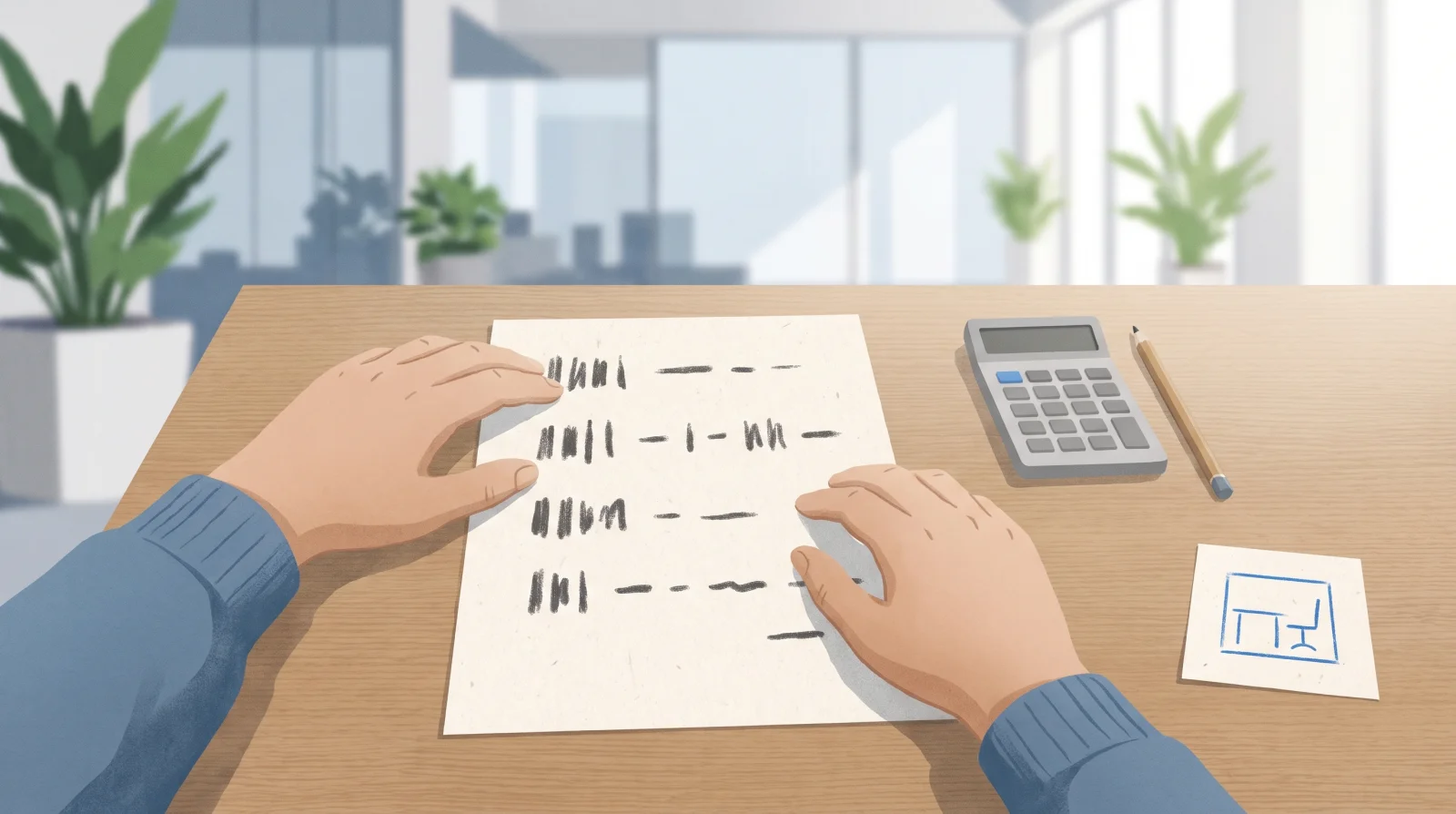
Imagine checking an internal worksheet before passing a total to the finance owner. The request asks for the number of entries in six groups of twelve, then mentions that the team is moving rooms on Friday. The move changes nothing about the intended calculation: six times twelve is seventy-two. Could that extra background still affect an AI assistant's answer? Historical arithmetic studies show that irrelevant additions can affect answers under the conditions tested. For an accounts-payable coordinator, the useful response is to make the working checkable, not simply to ask for a more convincing explanation.Imagine que revisa una hoja de trabajo interna antes de pasar un total a la persona responsable de finanzas. La solicitud pide contar las entradas de seis grupos de doce y añade que el equipo cambiará de sala el viernes. La mudanza no altera el cálculo previsto: seis por doce son setenta y dos. ¿Podría ese dato adicional afectar a la respuesta de un asistente de IA? Estudios históricos de aritmética muestran que la información irrelevante puede influir en las respuestas bajo las condiciones evaluadas. Para quien coordina cuentas por pagar, lo útil es poder comprobar las operaciones, no pedir una explicación más convincente.Imaginez que vous vérifiez une feuille de travail interne avant de transmettre un total au responsable financier. La demande porte sur le nombre d’entrées dans six groupes de douze, puis précise que l’équipe change de salle vendredi. Ce déménagement ne modifie pas le calcul attendu : six fois douze font soixante-douze. Ce détail peut-il malgré tout influencer la réponse d’un assistant IA ? Des études historiques sur l’arithmétique montrent que des ajouts sans pertinence peuvent affecter les réponses dans les conditions évaluées. Pour une personne chargée de coordonner les comptes fournisseurs, l’enjeu est de rendre le calcul vérifiable, pas d’obtenir une explication plus convaincante.Tasavvur qiling, moliya bo‘yicha mas’ulga jami sonni berishdan oldin ichki ish jadvalini tekshiryapsiz. So‘rovda har biri o‘n ikkitadan bo‘lgan oltita guruhdagi yozuvlar soni so‘ralgan, keyin esa jamoa juma kuni boshqa xonaga ko‘chishi aytilgan. Ko‘chish kerakli hisobni o‘zgartirmaydi: olti karra o‘n ikki yetmish ikki bo‘ladi. Shunday bo‘lsa ham, bu tafsilot AI yordamchi javobiga ta’sir qilishi mumkinmi? Oldingi arifmetik tadqiqotlar sinov sharoitlarida keraksiz ma’lumot javobga ta’sir qilishi mumkinligini ko‘rsatgan. Yetkazib beruvchilarga to‘lovlar bo‘yicha muvofiqlashtiruvchi uchun foydali yo‘l yanada ishontiradigan izoh so‘rash emas, hisobni tekshirish mumkin bo‘lgan holga keltirishdir.假设您正在核对一份内部工作表,准备把总数交给财务负责人。您让助手计算六组记录的总条数,每组十二条,又补充了一句:团队周五要换办公室。搬办公室不会改变这里要算的内容:六乘十二等于七十二。但这句背景仍可能影响 AI 助手的答案吗?历史算术研究表明,在所测试的条件下,无关信息确实可能影响答案。对应付账款协调人员来说,更有用的做法是让计算过程可核对,而不是再要一段更有说服力的解释。
SynexasPublishedPublicadoPubliéE’lon qilingan发布日期
Keep the arithmetic fixed.
Check what entered the working.Mantenga fijo el cálculo.
Compruebe qué datos se utilizaron.Gardez le même calcul.
Vérifiez les données utilisées.Hisobni o‘zgartirmang.
Qaysi ma’lumot ishlatilganini tekshiring.保持计算任务不变。
查看哪些信息进入了算式。
Evaluation scopeAlcance de la evaluaciónPérimètre de l’évaluationBaholash doirasi评估范围
Start with the exact quantity requested, the relevant inputs and their units. Background is irrelevant only if removing it leaves the intended calculation unchanged.Empiece por la cantidad exacta que se solicita, los datos necesarios y sus unidades. Un dato de contexto solo es irrelevante si eliminarlo no modifica el cálculo previsto.Partez de la quantité exacte demandée, des données nécessaires et de leurs unités. Un élément de contexte n’est sans pertinence que si son retrait laisse le calcul attendu inchangé.Avval aynan nima hisoblanishi, kerakli qiymatlar va ularning birliklarini belgilang. Bir tafsilotni olib tashlash kerakli hisobni o‘zgartirmasagina, u bu vazifa uchun keraksiz hisoblanadi.先确定究竟要算什么、需要哪些输入及其单位。只有删去某条背景后,原本应做的计算仍然不变,它才算与这项计算无关。
Comparable evidenceEvidencia comparableÉléments comparablesTaqqoslanadigan dalillar可比证据
The evidence concerns controlled arithmetic questions and historical models. It is not a measured error rate for today's workplace assistant or an invoice-processing workflow.La evidencia procede de preguntas aritméticas controladas y modelos de la época. No mide la tasa de error del asistente que usa hoy ni la de un proceso de gestión de facturas.Les résultats concernent des problèmes arithmétiques contrôlés et des modèles de l’époque. Ils ne mesurent pas le taux d’erreur d’un assistant actuel ni celui d’un traitement de factures.Dalillar nazorat ostidagi arifmetik savollar va o‘sha davr modellariga tegishli. Ular bugungi ish yordamchisi yoki hisob-fakturalar bilan ishlash jarayonining xato darajasini o‘lchamaydi.证据来自受控算术题和当时的模型,不是对您今天使用的办公助手或发票处理流程测得的错误率。
Review ownershipResponsable de la revisiónResponsable de la revueTekshiruv uchun mas’ul审阅责任
A named finance reviewer checks the inputs and working. The worksheet owner decides whether the total can circulate; the assistant does not inherit that responsibility.Una persona designada de finanzas revisa los datos y las operaciones. Quien responde por la hoja decide si el total puede circular; el asistente no asume esa responsabilidad.Un réviseur financier désigné vérifie les données et les opérations. Le responsable de la feuille décide si le total peut être diffusé ; cette responsabilité ne revient pas à l’assistant.Tayinlangan moliyaviy tekshiruvchi qiymatlar va amallarni tekshiradi. Jami sonni tarqatish mumkinligini jadval uchun mas’ul hal qiladi; bu mas’uliyat yordamchiga o‘tmaydi.由指定的财务审阅人核对输入和计算过程。总数能否传阅,由工作表负责人决定;助手不会因此接手责任。
Acceptance decisionDecisión de aceptaciónDécision d’acceptationQabul qilish qarori验收决定
Keep both requests, both answers if compared, and the separate working. A changed answer is a discrepancy to examine, not permission to choose whichever total looks preferable.Conserve ambas solicitudes, las dos respuestas si las compara y el cálculo realizado por separado. Una respuesta distinta exige revisar la discrepancia, no elegir el total que más convenga.Conservez les deux demandes, les deux réponses si vous les comparez et le calcul effectué séparément. Une réponse différente appelle un examen, pas le choix du total qui vous arrange.Ikki so‘rovni, taqqoslansa ikkala javobni ham va alohida bajarilgan hisobni saqlang. Javob o‘zgarsa, tafovutni tekshirish kerak; bu ma’qulroq sonni tanlashga asos emas.如果比较两种提问,应保留两份请求、两份回答及单独完成的计算。答案不同意味着需要核查差异,不意味着可以挑一个更合意的数。
An extra sentence can matter.
Even when the answer should not change.Una frase adicional puede influir.
Aunque la respuesta deba ser la misma.Une phrase de plus peut compter.
Même si la réponse doit rester identique.Bitta qo‘shimcha gap ta’sir qilishi mumkin.
Javob o‘zgarmasligi kerak bo‘lsa ham.多一句话,可能就有影响。
即使正确答案本应不变。
In their 2023 GSM-IC paper, Freda Shi and colleagues describe a deliberately narrow comparison. They retain the original arithmetic problem and add one sentence that does not affect its solution. Their historical model tests found that irrelevant information could reduce problem-solving accuracy across the prompting approaches investigated. That design matters: the researchers were not asking the assistant to solve a genuinely different calculation. The extra words changed the input, but not the intended answer. The business lesson is equally narrow. A request can contain everything needed for the right total and still invite working that uses something it should leave out.En su artículo de 2023 sobre GSM-IC, Freda Shi y sus colegas describen una comparación deliberadamente acotada. Mantienen el problema aritmético original y añaden una frase que no afecta a su solución. Sus pruebas con modelos de aquella época detectaron que la información irrelevante podía reducir la exactitud con las distintas técnicas de solicitud evaluadas. El diseño importa: no estaban pidiendo resolver un cálculo realmente diferente. Las palabras adicionales cambiaban la entrada, pero no la respuesta prevista. La enseñanza para el trabajo es igual de concreta. Una solicitud puede contener todo lo necesario para obtener el total correcto y, aun así, dar lugar a operaciones que incorporen algo que debería quedar fuera.Dans leur article de 2023 sur GSM-IC, Freda Shi et ses collègues décrivent une comparaison volontairement ciblée. Ils conservent le problème arithmétique initial et ajoutent une phrase qui ne modifie pas sa solution. Leurs essais sur des modèles de l’époque montrent que ces informations peuvent réduire l’exactitude avec les différentes méthodes de formulation étudiées. Ce choix expérimental est important : les chercheurs ne demandaient pas de résoudre un calcul réellement différent. Les mots ajoutés changeaient l’entrée, mais pas la réponse attendue. La leçon pour le travail est tout aussi précise. Une demande peut contenir tout le nécessaire pour trouver le bon total et néanmoins conduire à utiliser une information qui devrait rester en dehors du calcul.Freda Shi va hammualliflar 2023-yilgi GSM-IC maqolasida aniq chegaralangan taqqoslashni tasvirlaydi. Ular dastlabki arifmetik masalani saqlab, yechimiga ta’sir qilmaydigan bitta gap qo‘shadi. O‘sha davr modellarida o‘tkazilgan sinovlar tekshirilgan turli so‘rov usullarida keraksiz ma’lumot javob aniqligini pasaytirishi mumkinligini ko‘rsatgan. Bu tuzilish muhim: tadqiqotchilar boshqa hisobni yechishni so‘ramagan. Qo‘shimcha so‘zlar kirish matnini o‘zgartirgan, lekin kutilgan javobni emas. Ish uchun olinadigan xulosa ham shunchalik aniq. So‘rovda to‘g‘ri jami sonni topishga kerakli barcha ma’lumot bo‘lishi mumkin, ammo yordamchi hisobga qo‘shmasligi kerak bo‘lgan tafsilotni ham ishlatishi mumkin.Freda Shi 及合作者在 2023 年的 GSM-IC 论文中,描述了一项边界明确的比较:保留原来的算术题,再加上一句不影响解答的信息。他们对当时模型的测试发现,在所考察的不同提问方法下,无关信息可能降低解题准确性。这个设计很重要:研究人员没有要求助手改做另一道计算。新增文字改变了输入,却没有改变应有的答案。对办公任务的启示也应限定在这一点:即使请求已经包含算出正确总数所需的全部信息,助手仍可能把本不该参与计算的内容用进去。
Iman Mirzadeh and colleagues examine a related problem in GSM-Symbolic, first submitted in 2024 and revised in 2025. Its GSM-NoOp experiment adds statements that appear relevant but have no role in the required calculation. The authors describe models turning such statements into unnecessary operations, including subtracting quantities that should not be subtracted. This is the part relevant here. Other experiments in the same paper change numerical values or problem difficulty; those are not interchangeable evidence for an unchanged calculation. Nor do observed failures, by themselves, settle the broader question of whether AI can reason.Iman Mirzadeh y sus colegas estudian un problema relacionado en GSM-Symbolic, presentado inicialmente en 2024 y revisado en 2025. Su experimento GSM-NoOp añade afirmaciones que parecen pertinentes, pero que no intervienen en el cálculo necesario. Los autores describen casos en los que los modelos las convierten en operaciones innecesarias, como restar cantidades que no correspondía restar. Esa es la parte pertinente aquí. Otros experimentos del artículo cambian valores numéricos o la dificultad del problema; no constituyen evidencia equivalente sobre un cálculo que permanece intacto. Los fallos observados tampoco resuelven por sí solos la cuestión más amplia de si la IA puede razonar.Iman Mirzadeh et ses collègues étudient une difficulté voisine dans GSM-Symbolic, soumis initialement en 2024 et révisé en 2025. Leur expérience GSM-NoOp ajoute des énoncés apparemment pertinents, mais sans rôle dans le calcul requis. Les auteurs décrivent des modèles qui les transforment en opérations inutiles, notamment en soustrayant des quantités qui ne devaient pas l’être. C’est cette expérience qui nous intéresse ici. D’autres parties de l’article modifient les valeurs numériques ou la difficulté ; elles ne constituent pas une preuve équivalente pour un calcul inchangé. Les échecs observés ne tranchent pas non plus, à eux seuls, la question générale de la capacité de l’IA à raisonner.Iman Mirzadeh va hammualliflar dastlab 2024-yilda taqdim etilgan, 2025-yilda yangilangan GSM-Symbolic ishida o‘xshash muammoni o‘rganadi. GSM-NoOp tajribasida aloqadordek ko‘rinadigan, lekin kerakli hisobda o‘rni bo‘lmagan gaplar qo‘shiladi. Mualliflar modellar bunday gaplarni ortiqcha amallarga aylantirganini, jumladan ayirilmasligi kerak bo‘lgan miqdorlarni ayirganini tasvirlaydi. Bu yerda aynan shu tajriba muhim. Maqoladagi boshqa tajribalarda son qiymatlari yoki masala qiyinligi o‘zgartiriladi; ular o‘zgarmagan hisob haqidagi dalil bilan bir xil emas. Kuzatilgan xatolar AI umuman mantiqiy fikrlay oladimi degan keng savolni ham o‘z-o‘zidan hal qilmaydi.Iman Mirzadeh 及合作者在最初于 2024 年提交、2025 年修订的 GSM-Symbolic 论文中,研究了相关问题。其中的 GSM-NoOp 实验加入了看似有关、实际不参与所需计算的陈述。作者描述了一些模型如何把这类陈述变成多余的运算,包括减去本不应该减的数量。与本文有关的是这项实验。同一论文中的其他实验改变了数值或题目难度,不能把它们当作对“计算不变”的等同证据。观察到这些错误,也不足以单独回答 AI 究竟能否推理这一更大的问题。
More context is not always wrong.
Less context is not a guarantee.Añadir contexto no siempre es un error.
Reducirlo tampoco ofrece garantías.Le contexte n’est pas toujours superflu.
Le raccourcir ne garantit rien.Ko‘proq kontekst doim xato emas.
Kamroq kontekst ham kafolat emas.背景不一定多余。
删短请求也不保证正确。
For the worksheet coordinator, the distinction is between useful conditions and unrelated background, not between long and short requests. A condition excluding some entries would change what should be counted. A room move would not, given the task described here. Removing a genuine condition merely to simplify the request would produce a different task. The papers also contain reasons not to turn their findings into an absolute rule. Shi and colleagues report improvements from instructions to ignore irrelevant information, examples and combining multiple generated solutions. Mirzadeh and colleagues report that changing the examples did not reliably remove the difficulty in their tested conditions, while some models benefited under particular comparisons. These are different experiments, not a universal verdict on one prompt. An instruction to ignore background may help, but neither a clean-looking request nor an improved benchmark result establishes that this particular worksheet answer is correct.Para quien revisa la hoja, la distinción importante es entre condiciones necesarias y datos ajenos a la operación, no entre solicitudes largas y cortas. Una condición que excluyera algunas entradas cambiaría lo que debe contarse. Un cambio de sala no lo haría en la tarea descrita. Eliminar una condición real para simplificar la solicitud crearía otra tarea. Los artículos también dan motivos para evitar reglas absolutas. Shi y sus colegas señalan mejoras al indicar que se ignore la información irrelevante, aportar ejemplos y combinar varias soluciones generadas. Mirzadeh y sus colegas indican que cambiar los ejemplos no eliminó de forma fiable la dificultad en las condiciones estudiadas, aunque algunos modelos mejoraron en comparaciones concretas. Son experimentos distintos, no un veredicto universal sobre una fórmula de solicitud. Pedir que se ignore el contexto puede ayudar, pero ni una solicitud depurada ni un mejor resultado experimental demuestran que la respuesta de esta hoja sea correcta.Pour la personne qui prépare la feuille, la distinction utile oppose les conditions nécessaires aux renseignements sans rapport avec le calcul, et non les demandes longues aux demandes courtes. Une condition excluant certaines entrées changerait ce qu’il faut compter. Un changement de salle ne le ferait pas dans la tâche décrite. Supprimer une véritable condition pour simplifier la demande créerait une autre tâche. Les études invitent aussi à éviter les règles absolues. Shi et ses collègues rapportent des améliorations grâce à des consignes demandant d’ignorer les informations inutiles, à des exemples et à la combinaison de plusieurs solutions générées. Mirzadeh et ses collègues indiquent que changer les exemples ne supprimait pas de manière fiable la difficulté dans leurs conditions, tout en relevant des améliorations pour certains modèles dans certaines comparaisons. Ces expériences différentes ne livrent pas un verdict universel sur une formulation. Demander d’ignorer le contexte peut aider, sans qu’une demande épurée ou un meilleur résultat expérimental prouve l’exactitude de cette feuille.Jadvalni tayyorlayotgan xodim uchun muhim farq uzun va qisqa so‘rov o‘rtasida emas, zarur shart va hisobga aloqasiz tafsilot o‘rtasidadir. Ayrim yozuvlarni hisobdan chiqarish sharti nimani sanash kerakligini o‘zgartiradi. Bu yerda tasvirlangan vazifada boshqa xonaga ko‘chish esa o‘zgartirmaydi. So‘rovni soddalashtirish uchun haqiqiy shartni olib tashlash boshqa vazifa yaratadi. Tadqiqotlar mutlaq qoida chiqarishga ham asos bermaydi. Shi va hammualliflar keraksiz ma’lumotni e’tiborsiz qoldirish ko‘rsatmasi, misollar va bir nechta yaratilgan yechimni birlashtirish natijalarni yaxshilaganini bildiradi. Mirzadeh va hammualliflar sinov sharoitlarida misollarni o‘zgartirish qiyinchilikni ishonchli tarzda bartaraf etmaganini, lekin ayrim taqqoslashlarda ba’zi modellar yaxshiroq natija berganini qayd etadi. Bular turli tajribalar, bitta so‘rov usuli haqidagi umumiy hukm emas. Kontekstni e’tiborsiz qoldirishni so‘rash yordam berishi mumkin. Ammo ixcham so‘rov ham, yaxshiroq tadqiqot natijasi ham aynan shu jadval javobi to‘g‘riligini isbotlamaydi.对核对工作表的人来说,要区分的是必要条件与无关背景,而不是长请求与短请求。如果有一项条件要求排除部分记录,它就改变了应计入的范围。在这里设定的任务中,换办公室则不会。为了简化请求而删掉真正的条件,等于换了任务。这两项研究也提醒我们,不要作绝对判断。Shi 及合作者报告,要求忽略无关信息、提供示例,以及综合多份生成的解答,都曾改善实验表现。Mirzadeh 及合作者则报告,在其测试条件下,改变示例未能稳定消除困难,但部分模型在特定比较中有所改善。这些是不同的实验,不能据此给某种提问方式下普遍结论。要求助手忽略背景可能有帮助,但请求看起来更干净,或基准测试成绩更好,都不能证明眼前这份工作表的答案正确。
Ask for working you can inspect.
Keep the review with a person.Pida operaciones que pueda comprobar.
La revisión sigue en manos de una persona.Demandez un calcul vérifiable.
Confiez sa revue à une personne.Tekshirish mumkin bo‘lgan hisobni so‘rang.
Tekshiruvni insonga qoldiring.让计算过程可核对。
把审阅留给具体的人。
An assistant could help organize the requested calculation and explain which supplied quantities it used. Treat that explanation as material to inspect, not as evidence that the explanation faithfully accounts for how the answer arose. For a proposed office check, first have the reviewer confirm the intended quantity, inputs, units and operation against the authorized worksheet. Then reproduce the calculation with an ordinary approved calculator or spreadsheet, checking what was entered and which formula was used. Those tools can also be given the wrong inputs or formula. If the team compares a concise request with one containing unrelated background, retain both versions and their responses. Keep other conditions as comparable as practical. Different answers flag a discrepancy, but one pair does not establish that the extra sentence caused it: an assistant's responses can vary for other reasons. Matching answers likewise do not prove robustness.Un asistente podría ayudar a organizar el cálculo solicitado y explicar qué cantidades utilizó. Examine esa explicación; no la tome como prueba de que describe fielmente cómo se obtuvo la respuesta. Como propuesta de comprobación en la oficina, pida primero a la persona revisora que confirme la cantidad buscada, los datos, las unidades y la operación frente a la hoja autorizada. Después, reproduzca el cálculo con una calculadora o una hoja de cálculo aprobadas, comprobando los valores introducidos y la fórmula utilizada. También esas herramientas pueden recibir datos o fórmulas incorrectos. Si compara una solicitud concisa con otra que añade contexto ajeno, conserve ambas y sus respuestas. Mantenga las demás condiciones tan comparables como sea posible. Dos respuestas distintas revelan una discrepancia, pero una sola pareja no demuestra que la frase añadida la causara: las respuestas pueden variar por otros motivos. Que coincidan tampoco demuestra resistencia a las distracciones.Un assistant pourrait aider à organiser le calcul demandé et expliquer quelles quantités il a utilisées. Examinez cette explication sans la considérer comme la preuve qu’elle décrit fidèlement la manière dont la réponse a été produite. Voici une proposition de vérification au bureau : le réviseur confirme d’abord la quantité recherchée, les données, les unités et l’opération à partir de la feuille autorisée. Il refait ensuite le calcul avec une calculatrice ou un tableur approuvés, en contrôlant les valeurs saisies et la formule. Ces outils peuvent eux aussi recevoir des données ou une formule erronées. Si l’équipe compare une demande concise à une version enrichie d’un contexte sans rapport, elle conserve les deux et leurs réponses. Les autres conditions restent aussi comparables que possible. Deux réponses différentes signalent un écart, mais une seule paire ne prouve pas que la phrase ajoutée l’a causé : les réponses peuvent varier pour d’autres raisons. Leur concordance ne prouve pas davantage la robustesse.Yordamchi so‘ralgan hisobni tartibga solish va qaysi qiymatlarni ishlatganini tushuntirishga ko‘maklashishi mumkin. Bu izohni tekshiriladigan material deb oling; u javob qanday hosil bo‘lganini aniq bayon qilganiga dalil emas. Ofisdagi tekshiruv uchun quyidagi yo‘l taklif etiladi: avval tekshiruvchi ruxsat etilgan asl jadvalga qarab so‘ralgan miqdor, qiymatlar, birliklar va amalni tasdiqlaydi. Keyin odatiy tasdiqlangan kalkulyator yoki elektron jadvalda hisobni qayta bajarib, kiritilgan qiymatlar va formulani tekshiradi. Bu vositalarga ham noto‘g‘ri qiymat yoki formula berilishi mumkin. Jamoa ixcham so‘rovni aloqasiz tafsilot qo‘shilgan so‘rov bilan taqqoslasa, ikkalasini va javoblarini saqlasin. Qolgan sharoitlar imkon qadar bir xil bo‘lsin. Turli javoblar tafovut borligini bildiradi, ammo bitta juftlik bunga qo‘shimcha gap sabab bo‘lganini isbotlamaydi: javoblar boshqa sabablarga ko‘ra ham o‘zgarishi mumkin. Javoblarning mos kelishi ham barqarorlik isboti emas.助手可以帮助整理计算要求,并解释自己用了哪些已提供的数量。应把这段解释当作待检查的内容,而不是它如实反映答案生成过程的证据。这里提出一个办公核对办法:先由审阅人对照获准使用的原始工作表,确认要算的量、输入、单位和运算;再用日常获准使用的计算器或电子表格重算,并检查录入值与公式。这些工具同样可能收到错误的输入或公式。如果团队比较简洁请求与加入无关背景的请求,应保留两个版本及其回答,并尽可能保持其他条件可比。两份答案不同,可以提示存在差异,但仅凭一组比较,不能认定就是新增句子造成的:助手的回答也可能因其他原因变化。答案相同,同样不能证明它不受这类干扰影响。
A proposed worksheet check, not an approval path
- Define the calculation
- Keep request and answer
- Check separate working
- Retain the mismatch
- Owner decides circulation
The finance reviewer confirms the intended quantity, inputs, units and operation. Remove background only if the task remains the same.
Retain the original request and response. If comparing another wording, keep that version and its response too; one pair cannot establish what caused a difference.
Reproduce the calculation using approved ordinary tools. Check their entered values and formula as well; agreement alone does not establish correctness.
Keep any unexplained difference open. Do not select the neater answer or treat this step as having resolved the mismatch.
The worksheet owner decides whether to circulate the total or request further checking. This proposed sequence was not tested by the papers and grants no accounting or payment authority.
Una propuesta de comprobación, no una vía de aprobación
- Definir el cálculo
- Guardar solicitud y respuesta
- Comprobar el cálculo aparte
- Mantener la discrepancia
- Decidir si se puede difundir
La persona revisora de finanzas confirma la cantidad solicitada, los datos, las unidades y la operación. Quite contexto solo si la tarea sigue siendo la misma.
Conserve la solicitud y la respuesta originales. Si compara otra redacción, guarde también esa versión y su respuesta; una sola pareja no demuestra la causa de una diferencia.
Reproduzca el cálculo con herramientas habituales aprobadas. Compruebe también los valores introducidos y la fórmula; la coincidencia no demuestra por sí sola que el resultado sea correcto.
Mantenga abierta cualquier diferencia sin explicación. No elija la respuesta mejor presentada ni dé por resuelta la discrepancia al llegar a este paso.
Quien responde por la hoja decide si el total puede circular o requiere más comprobaciones. Los artículos no evaluaron esta secuencia, que no otorga autoridad contable ni de pago.
Une proposition de vérification, pas un circuit d’approbation
- Définir le calcul
- Garder demande et réponse
- Vérifier le calcul séparément
- Conserver l’écart
- Décider de la diffusion
Le réviseur financier confirme la quantité demandée, les données, les unités et l’opération. Ne retirez un élément de contexte que si la tâche reste identique.
Conservez la demande initiale et sa réponse. Si vous comparez une autre formulation, gardez aussi cette version et sa réponse ; une seule paire ne permet pas d’établir la cause d’un écart.
Refaites le calcul avec les outils habituels approuvés. Vérifiez aussi les valeurs saisies et la formule ; la concordance seule ne prouve pas l’exactitude.
Laissez tout écart inexpliqué ouvert. Ne choisissez pas la réponse la mieux présentée et ne considérez pas cette étape comme une résolution.
Le responsable de la feuille décide de diffuser le total ou de demander d’autres vérifications. Cette séquence n’a pas été testée dans les articles et ne confère aucune autorité comptable ou de paiement.
Taklif etilgan jadval tekshiruvi, tasdiqlash yo‘li emas
- Hisobni belgilang
- So‘rov va javobni saqlang
- Alohida hisobni tekshiring
- Tafovutni ochiq qoldiring
- Tarqatishni mas’ul hal qiladi
Moliyaviy tekshiruvchi so‘ralgan miqdor, qiymatlar, birliklar va amalni tasdiqlaydi. Tafsilotni faqat vazifa o‘zgarmasa olib tashlang.
Asl so‘rov va javobni saqlang. Boshqa ifodani taqqoslasangiz, o‘sha nusxa va javobni ham saqlang; bitta juftlik tafovut sababini isbotlamaydi.
Tasdiqlangan odatiy vositalarda hisobni qayta bajaring. Ularga kiritilgan qiymatlar va formulani ham tekshiring; javoblar mosligi o‘zi to‘g‘rilik isboti emas.
Izohlanmagan tafovut ochiq qolsin. Chiroyliroq javobni tanlamang va bu bosqich tafovutni hal qildi deb hisoblamang.
Jadval uchun mas’ul jami sonni tarqatish yoki yana tekshirishni so‘rashni hal qiladi. Maqolalar bu ketma-ketlikni sinamagan; u buxgalteriya yoki to‘lov vakolatini bermaydi.
建议的工作表核对流程,不是审批通道
- 明确要算什么
- 保留请求与回答
- 核对单独计算
- 保留未解差异
- 负责人决定传阅
财务审阅人确认所求数量、输入、单位和运算。只有确认某条背景与原定计算无关,且删去后所需计算仍不变,才可删除;不得删去会影响计算的条件。
保留原始请求和回答。如果比较另一种措辞,也要保留该版本及其回答;一组比较不能确定差异的原因。
使用日常获准使用的工具重算,并检查其中的录入值和公式;结果一致本身不证明正确。
任何尚未解释的差异都继续保留。不要挑选更漂亮的回答,也不要把走到这一步当成问题已经解决。
由工作表负责人决定是否传阅总数,或要求进一步核对。论文没有测试这套建议流程,它也不提供会计或付款授权。
A mismatch needs an answer.
A tidy sequence is not approval.Una discrepancia requiere aclaración.
Seguir los pasos no equivale a aprobar.Un écart reste à expliquer.
Une suite d’étapes ne vaut pas approbation.Tafovutga izoh kerak.
Bosqichlardan o‘tish tasdiq degani emas.差异未解,就继续保留。
走完步骤不等于获得批准。
Before the total moves on, the reviewer should be able to show the intended calculation, the separately checked working and any difference from the assistant's output. If a number cannot be reconciled, keep that question visible for the worksheet owner rather than replacing it with the most polished response. The owner can ask for clarification or further checking before deciding what may circulate. This proposed sequence helps organize that conversation; neither cited study evaluated it as an office control. Even agreement between the assistant and a calculator leaves the task definition and entered values to be checked. The immediate deliverable is a reviewable worksheet total, not an accounting conclusion, a payment instruction or authority to act on it.Antes de pasar el total, la persona revisora debería poder mostrar el cálculo previsto, las operaciones comprobadas por separado y cualquier diferencia respecto a la respuesta del asistente. Si no puede conciliar un número, mantenga la pregunta visible para quien responde por la hoja, en lugar de sustituirla por la respuesta mejor redactada. Esa persona puede pedir aclaraciones o nuevas comprobaciones antes de decidir qué puede circular. La secuencia propuesta ayuda a ordenar esa conversación; ninguno de los estudios la evaluó como control de oficina. Incluso si el asistente y la calculadora coinciden, quedan por comprobar la definición de la tarea y los valores introducidos. El resultado inmediato es un total revisable, no una conclusión contable, una instrucción de pago ni una autorización para actuar.Avant de transmettre le total, le réviseur devrait pouvoir montrer le calcul attendu, les opérations vérifiées séparément et toute différence avec la réponse de l’assistant. Si un nombre reste inexpliqué, gardez la question visible pour le responsable de la feuille au lieu de la remplacer par la réponse la mieux rédigée. Ce responsable peut demander une clarification ou d’autres vérifications avant de décider ce qui peut être diffusé. La séquence proposée organise cette discussion ; aucune des deux études ne l’a évaluée comme contrôle de bureau. Même si l’assistant et la calculatrice concordent, la définition de la tâche et les valeurs saisies restent à vérifier. Le livrable immédiat est un total dont on peut examiner le calcul, pas une conclusion comptable, une instruction de paiement ou une autorisation d’agir.Jami son boshqalarga berilishidan oldin tekshiruvchi kerakli hisobni, alohida tekshirilgan amallarni va yordamchi javobidan farqni ko‘rsata olishi kerak. Biror sonning tafovuti izohlanmasa, uni chiroyliroq javob bilan almashtirmang; savolni jadval uchun mas’ulga ochiq holda yetkazing. Mas’ul nima tarqatilishi mumkinligini hal qilishdan oldin tushuntirish yoki qo‘shimcha tekshiruv so‘rashi mumkin. Taklif etilgan ketma-ketlik shu suhbatni tartibga soladi; keltirilgan ikki tadqiqotning hech biri uni ofis nazorati sifatida baholamagan. Yordamchi va kalkulyator javobi mos kelsa ham, vazifa ta’rifi va kiritilgan qiymatlar tekshirilishi kerak. Hozirgi natija tekshirish mumkin bo‘lgan jami sondir, buxgalteriya xulosasi, to‘lov ko‘rsatmasi yoki harakat qilish vakolati emas.在总数交给下一位同事前,审阅人应能展示原本要做的计算、单独核对过的过程,以及它与助手输出之间的差异。如果某个数仍对不上,应把问题明确留给工作表负责人,而不是用措辞最漂亮的回答替换掉它。负责人可以要求澄清或进一步检查,再决定哪些内容可以传阅。这个建议流程只是帮助组织讨论;两篇引用研究都没有把它作为办公控制措施进行评估。即使助手与计算器得出相同答案,任务定义和录入值仍需检查。当前要交付的是一个过程可审阅的工作表总数,不是会计结论、付款指示或据此行动的授权。
Two historical arithmetic studies.
A bounded answer for today's worksheet.Dos estudios históricos de aritmética.
Una respuesta acotada para su hoja de trabajo.Deux études historiques d’arithmétique.
Une réponse délimitée pour votre feuille.Arifmetika bo‘yicha ikki oldingi tadqiqot.
Bugungi jadval uchun chegaralangan xulosa.两项历史算术研究。
为今天的工作表提供有限依据。
The four links represent two studies, not four replications: each has a paper body and an abstract/history page. On November 12, 2026, the arXiv histories listed GSM-IC v3 dated June 6, 2023 and GSM-Symbolic v2 dated August 27, 2025. The relevant returned text supports the distraction question, not a present-day product rate. Later detailed GSM-IC methods, the additional GSM-Symbolic appendix discussion, wider follow-up research and current workplace behavior were not checked. This article proposes a review aid, not an observed workplace result.Los cuatro enlaces corresponden a dos estudios, no a cuatro replicaciones: cada uno tiene un texto completo y una página de resumen e historial. El 12 de noviembre de 2026, los historiales de arXiv mostraban GSM-IC v3, del 6 de junio de 2023, y GSM-Symbolic v2, del 27 de agosto de 2025. El texto consultado respalda la pregunta sobre distracción, no una tasa de error de productos actuales. No se consultaron los métodos detallados posteriores de GSM-IC, la discusión adicional del apéndice de GSM-Symbolic, investigaciones posteriores más amplias ni el comportamiento actual en el trabajo. Este artículo propone una ayuda para revisar, no un resultado observado en una empresa.Les quatre liens correspondent à deux études, pas à quatre réplications : chacune possède un texte intégral et une page de résumé et d’historique. Au 12 novembre 2026, les historiques arXiv indiquaient GSM-IC v3 du 6 juin 2023 et GSM-Symbolic v2 du 27 août 2025. Les passages consultés étayent la question de la distraction, pas un taux d’erreur des produits actuels. Les méthodes détaillées ultérieures de GSM-IC, la discussion supplémentaire en annexe de GSM-Symbolic, la littérature de suivi et les usages actuels au travail n’ont pas été examinés. Cet article propose une aide à la revue, pas un résultat observé en entreprise.To‘rtta havola ikkita tadqiqotga tegishli, to‘rtta takroriy tajribaga emas: har birining asosiy matni hamda annotatsiya va versiyalar tarixi sahifasi bor. 2026-yil 12-noyabrda arXiv tarixida GSM-IC v3 sanasi 2023-yil 6-iyun, GSM-Symbolic v2 sanasi esa 2025-yil 27-avgust deb ko‘rsatilgan. O‘qilgan matn chalg‘ituvchi ma’lumot haqidagi savolni asoslaydi, hozirgi mahsulotlarning xato darajasini emas. GSM-ICning keyingi batafsil metodlari, GSM-Symbolic ilovasidagi qo‘shimcha muhokama, keyingi kengroq tadqiqotlar va bugungi ish sharoitidagi natijalar tekshirilmadi. Maqola tekshiruvga yordamchi usulni taklif qiladi, kuzatilgan korxona natijasini emas.四个链接对应两项研究,不是四次重复验证:每项研究分别列出正文及摘要与版本历史页面。截至 2026 年 11 月 12 日,本次读取的 arXiv 历史页面列出:GSM-IC v3 修订于 2023 年 6 月 6 日,GSM-Symbolic v2 修订于 2025 年 8 月 27 日。已读到的相关文字支持讨论无关信息干扰问题,不支持推算当前产品的错误率。GSM-IC 后文的详细方法、GSM-Symbolic 附录中的新增讨论、更广泛的后续研究及当前办公表现均未检查。本文提出的是审阅辅助办法,不是已经观察到的企业使用成果。
Let’s make AI useful.
For your actual work.
Tell us about a job your team repeats, not your confidential files. We’ll show you how Matrix handles work like it.
Request a demo